Second Metropolis: Pragmatic Pluralism in Gilded Age Chicago, Silver Age Moscow, and Meiji Osaka

-
By comparing North America’s, Russia’s, and Japan’s “second cities”—Chicago, Moscow, and Osaka—Second Metropolis discloses the extent to which social fragmentation, frequently viewed as an obstacle to democratic development, actually fostered a “pragmatic pluralism” that nurtured pluralistic public policies. Such policies are explored through six case studies—the politics of street railways and charter reform in Chicago, adult education and housing in Moscow, and harbor revitalization and poverty alleviation in Osaka—that illustrate how even those with massive political and economic power were stymied by the complexity of their communities. Chicago, Moscow, and Osaka, although the products of very different nations and cultures, nonetheless shared an important experience of inclusive politics during an era of extraordinary growth and social diversity. The success of all three cities, which went well beyond mere survival, rested on a distinctive political resource: pragmatic pluralism.
Blair A. Ruble is the director of the Kennan Institute for Advanced Russian Studies, a program of the Woodrow Wilson International Center for Scholars, where he is also codirector of the Comparative Urban Studies Project. He is the author of Leningrad: Shaping a Soviet City and Money Sings: The Changing Politics of Urban Space in Post-Soviet Yaroslavl.
A paperback edition of this book (ISBN 978-1-9303-6515-5) was published and distributed through Johns Hopkins University Press in 2004.
Author
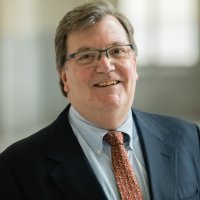 Blair A. RubleDistinguished Fellow;Schedule interview
Former Wilson Center Vice President for Programs (2014-2017); Director of the Comparative Urban Studies Program/Urban Sustainability Laboratory (1992-2017); Director of the Kennan Institute for Advanced Russian Studies (1989-2012) and Director of the Program on Global Sustainability and Resilience (2012-2014)Browse Insights & AnalysisExplore More
Browse Insights & Analysis


